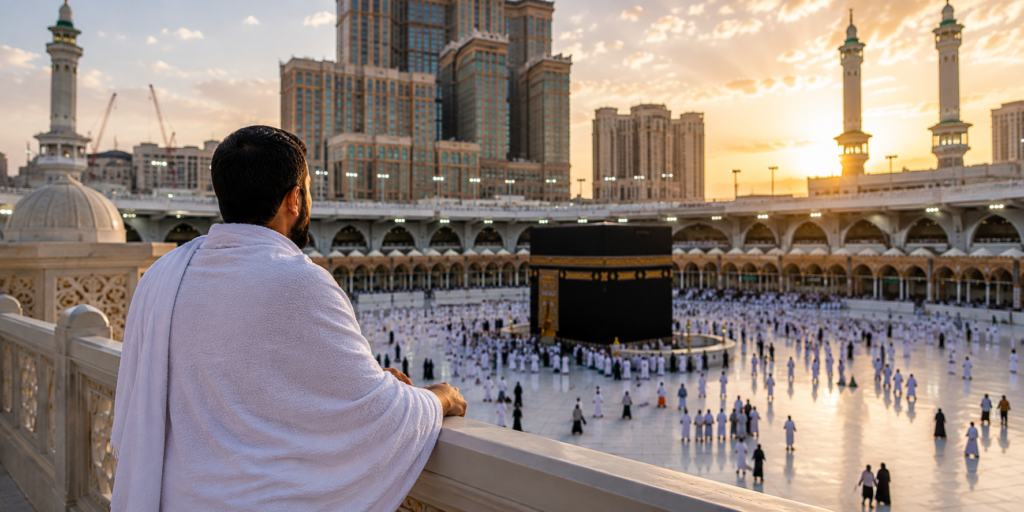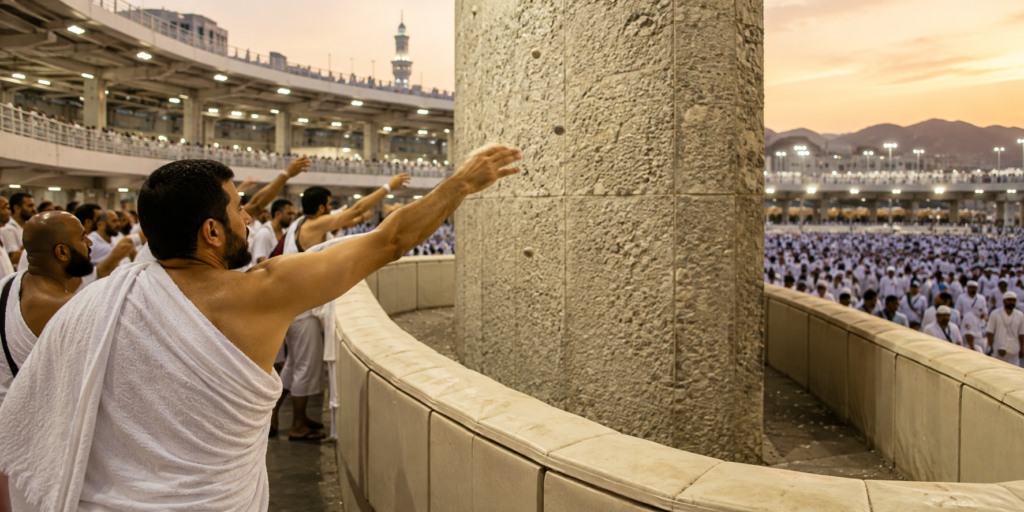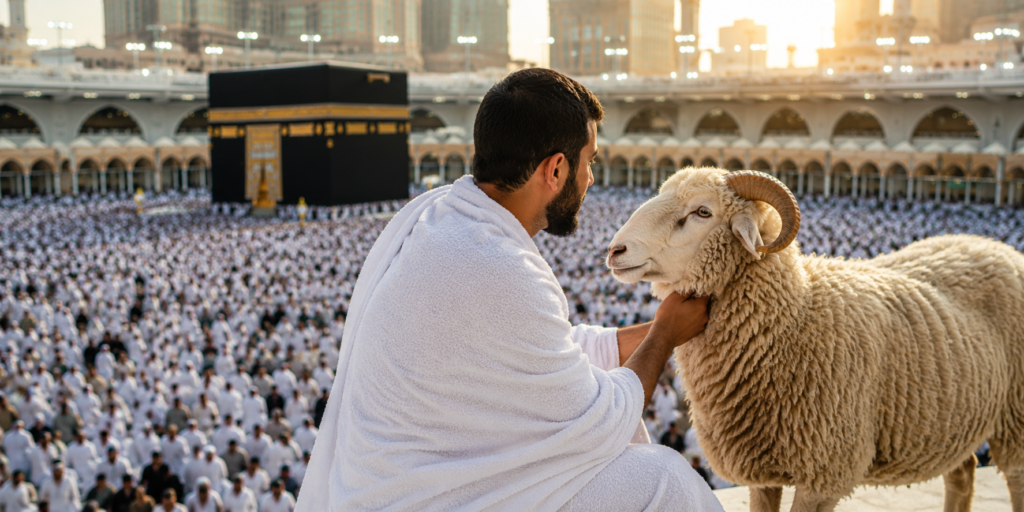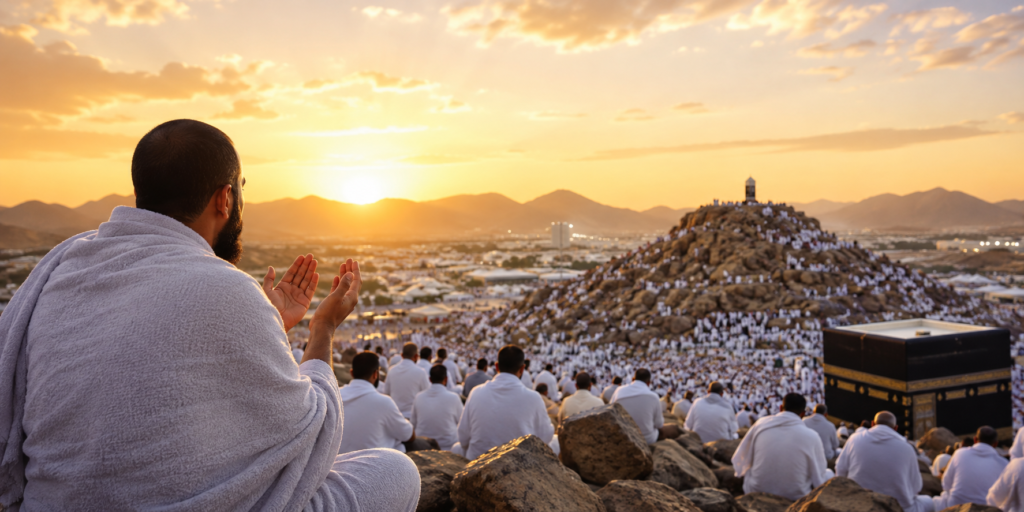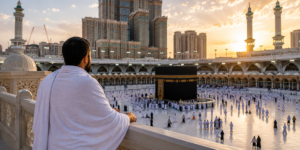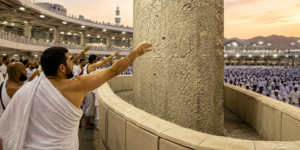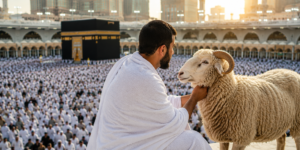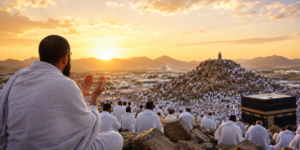


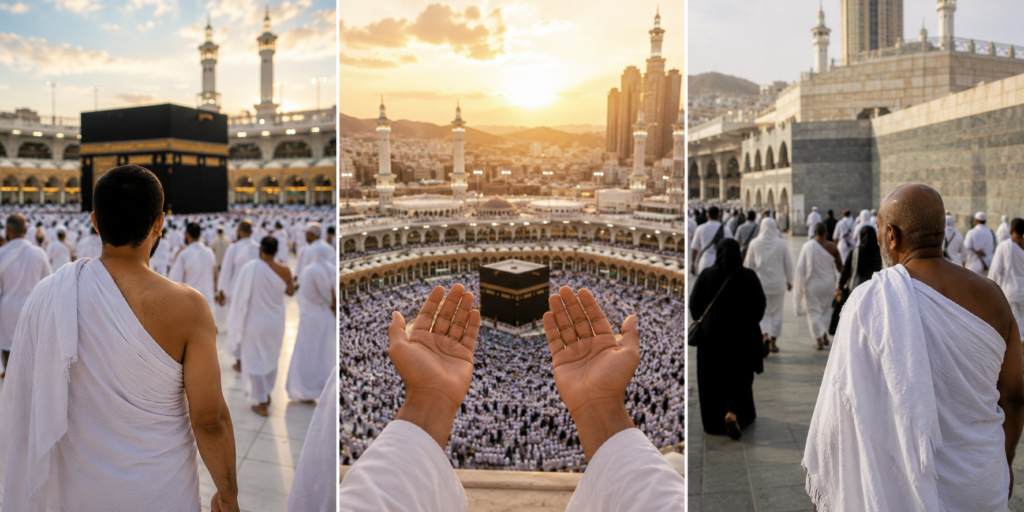
Makkah has welcomed pilgrims for centuries, yet no two journeys unfold the same way. Islam built room for choice into this sacred duty, letting each traveler shape a path suited to their circumstances. Some arrive weeks before the rites begin, some fly in with only days to spare, and some already live within the sacred boundary.
These types of Hajj in Islam exist so that every pilgrim, regardless of their timeline, can fulfill this pillar of faith with grace and ease. This guide explains what separates Tamattu, Qiran, and Ifrad, covering ihram rules, sacrifice requirements, and the reasoning behind each path so that you can approach your journey with clarity and quiet confidence.
Types of Hajj Explained
Each path blends ihram, timing, and Umrah in its own distinct way.
Hajj Tamattu
Tamattu means to enjoy a benefit. A pilgrim completes Umrah first and rests before starting Hajj. You enter ihram, perform tawaf and sa’i, then remove ihram clothing. Days later, ihram goes back on for Hajj alone. A well-planned Hajj package for Tamattu bundles flights, hotels, and the sacrifice into a single price.
Hajj Qiran
Qiran means joining two things together. A pilgrim combines Umrah and Hajj into one unbroken ihram until the final Hajj rite. The Prophet Muhammad performed this form himself. Pilgrims seeking convenience often book a Hajj-e-Qiran package in Dubai that bundles visas and sacrifices.
Hajj Ifrad
Ifrad singles out Hajj on its own, with no Umrah paired to it. A pilgrim enters ihram with the sole intention of Hajj and stays in that state until the rites conclude. Makkah residents commonly choose this path, since Umrah can wait.
Difference Between Hajj-e-Tamattu, Qiran and Ifrad
Five factors set these three paths apart.
- Ihram and Intention: Tamattu pilgrims declare two intentions across two ihram periods. Qiran pilgrims declare both together in a single ihram. Ifrad pilgrims declare only one intention, focused on Hajj.
- Umrah Combination: Tamattu completes Umrah first, closing it before Hajj begins. Qiran combines Umrah with the Hajj ihram. Ifrad leaves Umrah out of the plan.
- Animal Sacrifice: Tamattu and Qiran both require a sacrificial animal, known as the hadi. Ifrad pilgrims carry no such obligation, thereby lowering the cost of the trip.
- Duration in Ihram: Qiran keeps a pilgrim in ihram the longest, sometimes for ten days or more. Tamattu allows a rest period between Umrah and Hajj. Ifrad sits between the two.
- Best Suited Pilgrims: International travelers usually find Tamattu manageable. Qiran suits Makkah residents or pilgrims short on time. Ifrad appeals to those planning a separate Umrah trip later.
Hajj Tamattu vs Qiran vs Ifrad
Here is a quick side-by-side look at all three paths.
| Feature | Tamattu | Qiran | Ifrad |
| Ihram Periods | Two separate | One continuous | One, Hajj only |
| Umrah Included | Yes, performed first | Yes, combined | No |
| Animal Sacrifice | Required | Required | Not required |
| Best For | International pilgrims | Makkah residents, limited time | Separate Umrah planners |
This table makes one thing clear: no single Hajj path fits everyone. Three N Travel & Tourism LLC is a dependable Hajj and Umrah agency in Dubai that matches you with the option that suits your dates and budget. Book with us today for a Hajj journey planned around you!
Hajj Rules for Tamattu, Qiran & Ifrad
Each type follows its own steps for ihram and sacrifice.
Hajj-e-Tamattu Rules
Enter ihram at the miqat with the intention of Umrah alone. Complete tawaf and sa’i, then trim the hair and exit ihram. Rest until Hajj days begin, then enter ihram again with the intention of Hajj.
Hajj-e-Qiran Rules
Enter ihram at the miqat with the combined intention for Umrah and Hajj. Perform tawaf and sa’i for Umrah, but stay in ihram without exiting it. Remain in this state through every stage of Hajj until the final day. A hadi is required just as it is for Tamattu.
Hajj-e-Ifrad Rules
Enter ihram at the miqat with the sole intention of Hajj. Ihram stays in place until the final day, with no Umrah performed alongside it. After the stoning and tawaf al-ifadah, a pilgrim trims the hair and exits ihram. Knowing these rules helps you skip the sacrifice cost.
Which Type of Hajj Should You Perform?
A few honest questions can make the decision much easier. Think about when you will arrive, how much you plan to spend, and how much physical effort you feel comfortable managing. Pilgrims who arrive well before Hajj often appreciate having time to rest before the main rituals begin. Those reaching Makkah closer to Hajj may lean toward an option with fewer steps before the pilgrimage starts.
Your budget and travel arrangements also play a big role. Some choices include the cost of a sacrificial animal, while others do not, which can affect overall expenses. Physical comfort matters as well, since one option requires staying in ihram longer than the others. If you are traveling with family or a larger group, consider how each option fits your schedule and coordination, making the pilgrimage smoother for everyone involved.
Frequently Asked Questions
What is the easiest type of Hajj for beginners?
Tamattu is generally the easiest for first-timers, since it offers a natural rest period.
Which type of Hajj should I perform?
It depends on your budget, travel plans, and personal circumstances. A trusted scholar or Hajj operator can help you decide.
Can I switch from one type to another after entering ihram?
Switching is possible in some cases, but discuss it with a guide first.
Which type did the Prophet Muhammad perform?
Historical accounts point to Qiran as the Prophet’s own choice, though he recommended Tamattu for several companions.
Is Ifrad only for Makkah residents?
Ifrad suits Makkah residents well, but any pilgrim can select it, especially those planning a separate Umrah trip.
Conclusion
The right Hajj path depends on your travel plans, budget, and personal circumstances. Every option fulfills this important pillar of Islam while following its own rules and practices. Tamattu brings ease, Qiran carries deep spiritual weight through continuous devotion, and Ifrad offers a simpler path for Makkah residents. This guide presents the types of Hajj in Islam in clear, easy language so you can choose the path that suits your journey. Reflect on your dates, budget, and readiness before you settle on one path.
The next step after choosing your Hajj type is finding a travel partner you can trust. Three N Travel & Tourism LLC makes Hajj from Dubai simple with visa assistance, flights, accommodation, and dedicated support throughout your journey. Get in touch today for a journey planned with care!