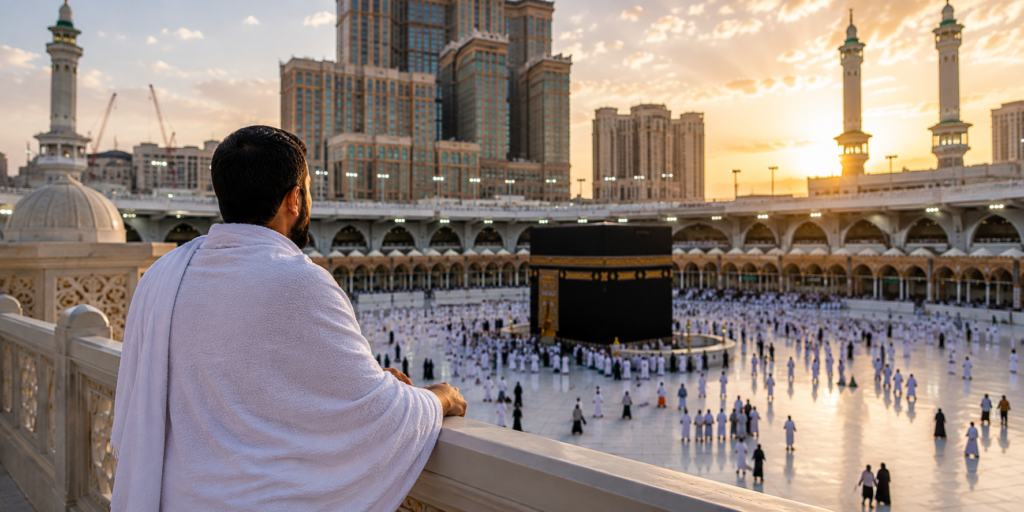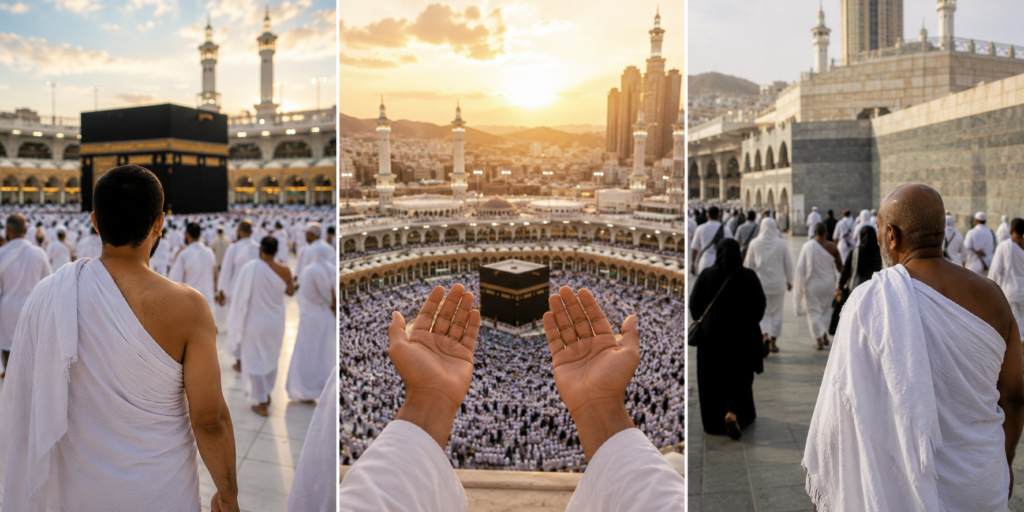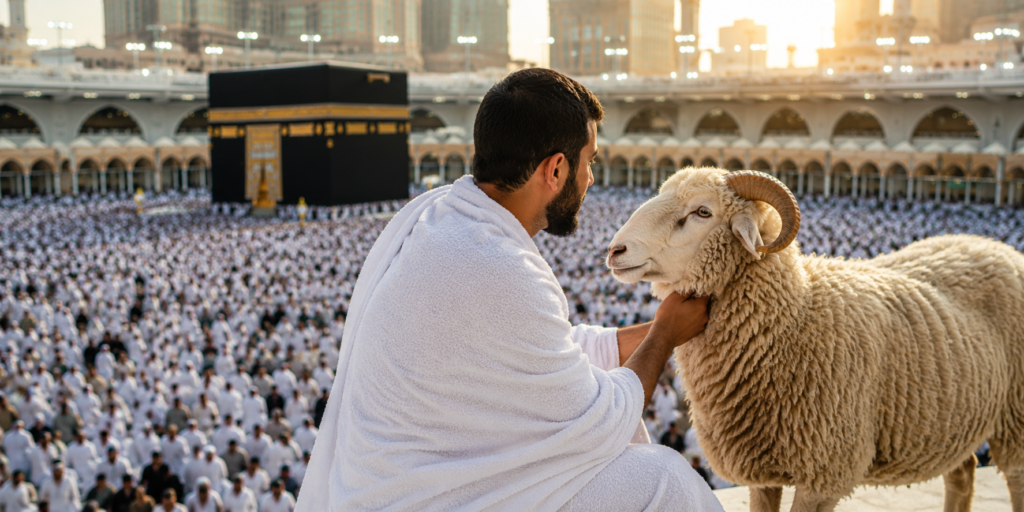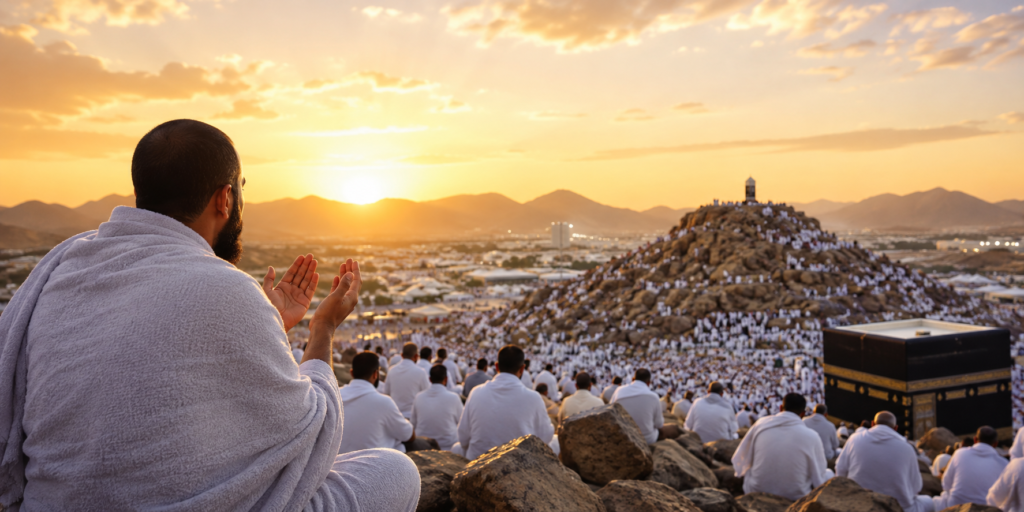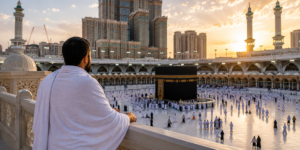


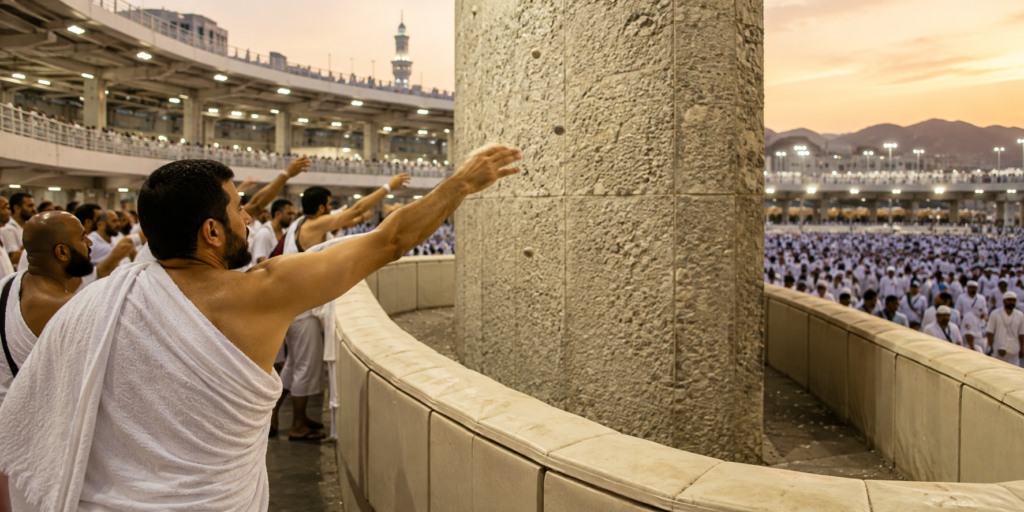
Millions of pilgrims walk toward Mina each year to complete one of the most physical acts of Hajj. Pebbles in hand, they line up at three tall pillars and throw with purpose and faith. In this guide, we will cover what Rami Al Jamarat is, its history, steps, and safety rules. Small stones carry a big meaning, standing for a moment of resolve that stretches back to Prophet Ibrahim (Peace be upon Him). Let’s get into it!
Stoning of Jamarat Explained
Rami al-Jamarat is the part of Hajj where pilgrims throw small stones at three pillars in Mina. It goes back to Prophet Ibrahim (Peace be upon Him), who faced Satan three separate times on his way to fulfill Allah’s command. Each time Satan tried to talk him out of it, Ibrahim answered by throwing a stone, not a word.
The three pillars sit in a line about 150 meters apart, and each one marks a different spot where that test took place. Pilgrims walk through them in the same order every day of the ritual, small pillar first, then the middle, then the large one. It is a quiet, physical way of repeating Ibrahim’s choice for yourself.
Collecting Pebbles for Jamarat at Muzdalifah
Pilgrims gather their pebbles at Muzdalifah, right after arriving from Arafat, usually after sunset on the 9th of Dhul Hijjah. You will need seven stones for the first day and twenty-one for each day after that, so most people pick up sixty to eighty just to be safe. A few extra stones save you a return trip once the days get busy.
Size matters more than people expect. Aim for something close to a chickpea, no bigger than a fingertip, since larger stones can hurt someone standing near the pillar. Pilgrims usually collect small, smooth stones at Muzdalifah because they are comfortable to carry and easy to throw.
Step-by-Step Process of the Jamarat Ritual
Here’s what happens on each day you spend in Mina, laid out in order.
Day One: The First Pillar
On the 10th of Dhul Hijjah, you throw seven stones at Jamrat al-Aqaba only, using pebbles gathered a day earlier. Throw one stone at a time, saying “Allahu Akbar” with each toss. This single act unlocks the rest of the day: the sacrifice and shaving the head.
Day Two: All Three Pillars
On the 11th, you move through all three pillars in order: small, middle, then large, throwing seven pebbles at each one. This is the heart of the Jamarat ritual as most pilgrims picture it. Pause after the first two pillars to face the Qibla and say a short prayer before the last one.
Day Three: Same Pattern
Repeat the exact order and method used on Day Two, pillar by pillar, pebble by pebble. Consistency matters here, since rushing raises the odds of mixing up the pillars or skipping a step. Take your time, stay in your lane on the bridge, and keep your count steady.
The Optional Extra Day
Pilgrims who stay in Mina through the 13th repeat the process once more, using the same order and pebble count. Those who leave before sunset on the 12th can skip this day without penalty. Either choice is valid, so pick whichever fits your plan.
The Right Throwing Technique
Hold each pebble between your thumb and index finger, raise your hand, and toss it underhand toward the pillar. This is the right way, and it stays the same every day. Throw one stone at a time, never a handful, and check that it reached the pillar before moving on.
Three pillars, a strict order, a set pebble count- it’s a lot to track. Three N Travel & Tourism LLC is a professional Hajj and Umrah Agency in Dubai, keeping your group on track through stoning day and all the rituals of Hajj. Contact us today for expert guidance!
The Schedule for Days of Jamarat at a Glance
Here is the full schedule in one place so that you can check it at a glance.
| Day | Pillars Stoned | Pebbles Needed | Standard Timing |
| 10th Dhul Hijjah | Jamrat al-Aqaba only | 7 | Sunrise to Dhuhr |
| 11th Dhul Hijjah | All three pillars | 21 | After Dhuhr to Maghrib |
| 12th Dhul Hijjah | All three pillars | 21 | After Dhuhr to Maghrib |
| 13th Dhul Hijjah (optional) | All three pillars | 21 | After Dhuhr to Maghrib |
Jamarat Timing Hajj Pilgrims Should Know
The stoning ritual allows more flexibility than many first-time pilgrims expect. Early morning and evening are often the most comfortable times, since temperatures are lower and crowds can be easier to manage. Many Hajj groups plan their visits during these hours to help pilgrims complete the ritual with greater ease.
Special consideration is also available for older adults, pregnant women, and pilgrims with health concerns. A quieter nighttime visit can reduce physical strain and make the experience more manageable. Planning with your group helps everyone complete the ritual safely and comfortably.
Jamaraat Bridge Safety Tips
The modern bridge was rebuilt with exactly this in mind, and a few habits keep you safer on it.
- Pick a bridge level that matches your group’s pace, since the upper floors are usually calmer than ground level
- Agree on a clear meeting point before anyone steps onto the bridge, in case your group gets separated
- Keep your Hajj ID visible and carry your camp details somewhere easy to reach
- Move with the flow of the crowd and never push against it, even if it feels slow
- Step aside toward a wall or railing right away if the crowd suddenly feels tightly packed
- Leave the area calmly for a few minutes if anything feels unsafe, then return once it clears
FAQs
Is stoning the Jamarat mandatory?
Yes, scholars across all four schools treat it as an obligatory part of Hajj.
Can someone else stone on my behalf?
Only if you are seriously ill or unable to perform it yourself, a companion can then throw the stones for you.
What happens if I miss a day?
You can make it up the next day, though missing it without a valid excuse may call for a penalty sacrifice.
How to throw pebbles at Jamarat?
Hold the pebble between your thumb and index finger of your right hand, then toss it underhand toward the pillar, one stone at a time.
Are all five bridge levels equally valid?
Yes, no level holds more religious weight, so pick whichever feels safest for your group.
Conclusion
The ritual stops feeling like a maze of rules once you know the order and the timing that go with it. It is a short, focused act of faith shared with millions of people at once. Gather your pebbles early, follow the daily order, and respect the timing rules. A little preparation turns this one day into one of the calmest parts of your whole Hajj.
A calm Hajj begins with a calm booking process. Three N Travel & Tourism LLC brings the same care to its 2027 Hajj packages for Dubai pilgrims, handling the details so your group can focus on the pilgrimage. Visit us today!