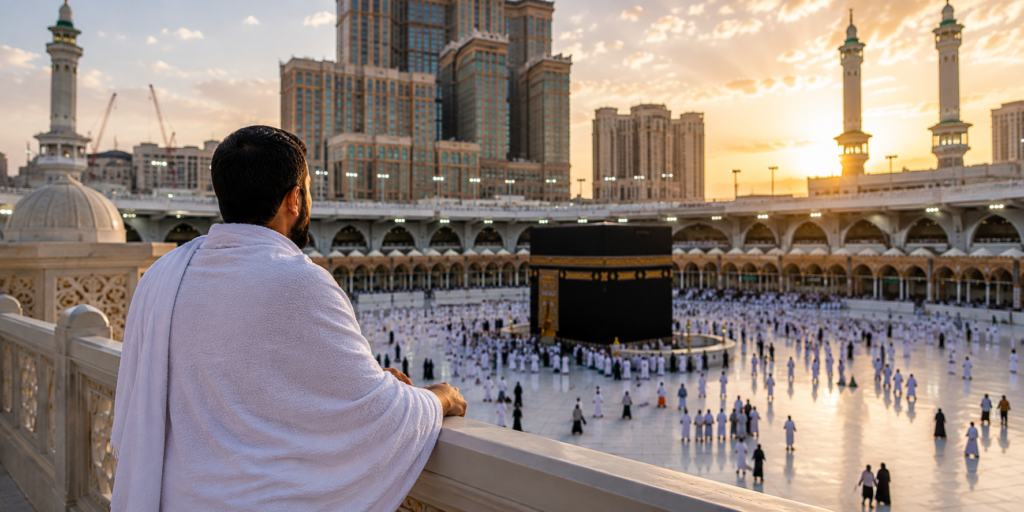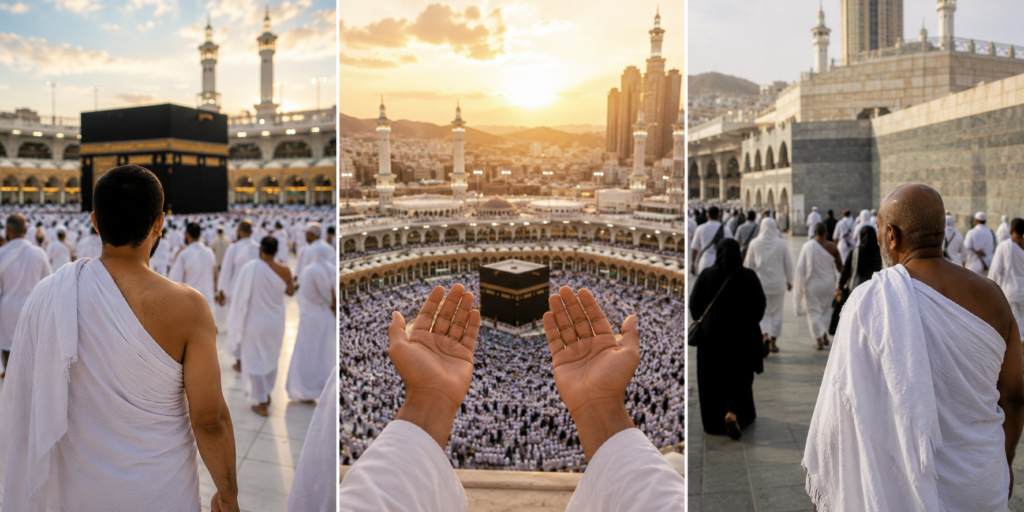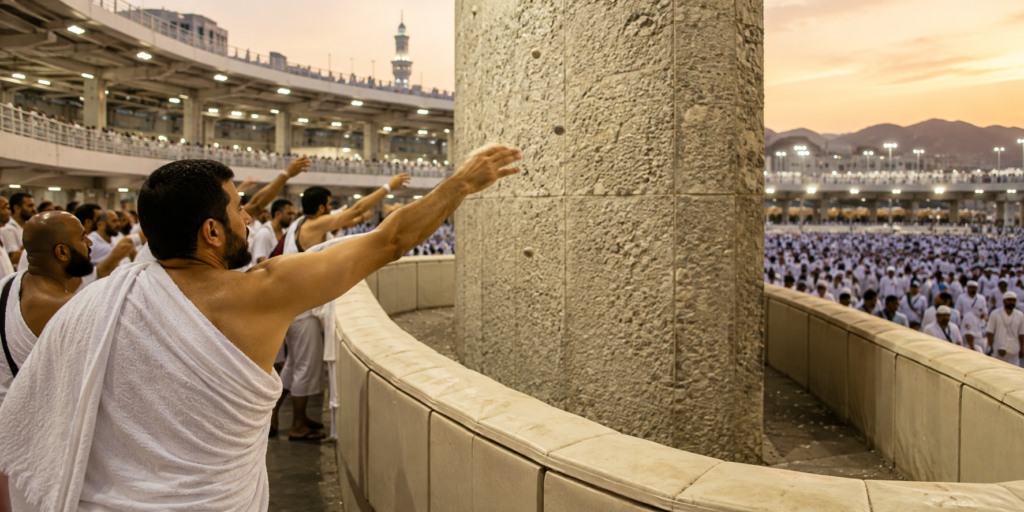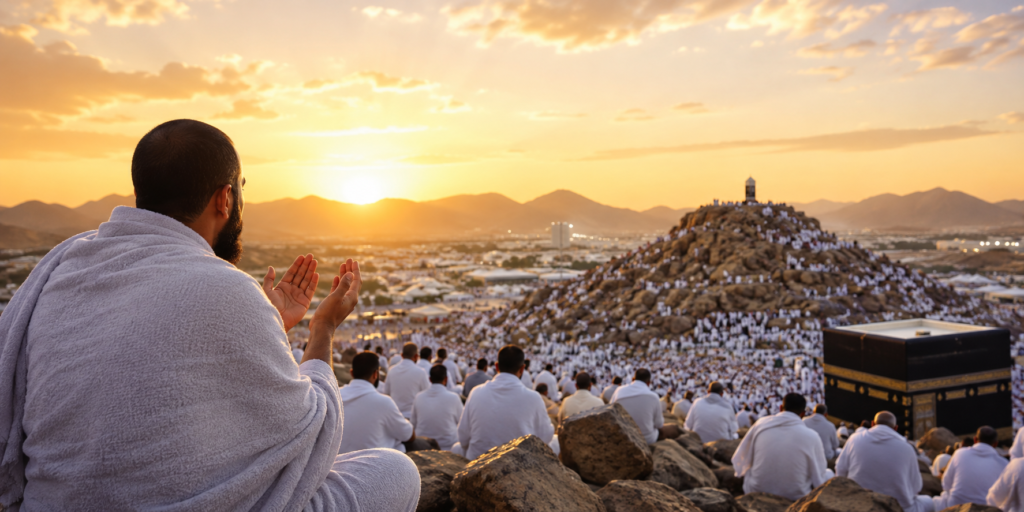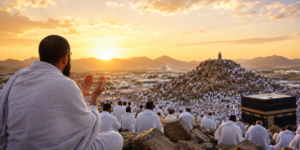


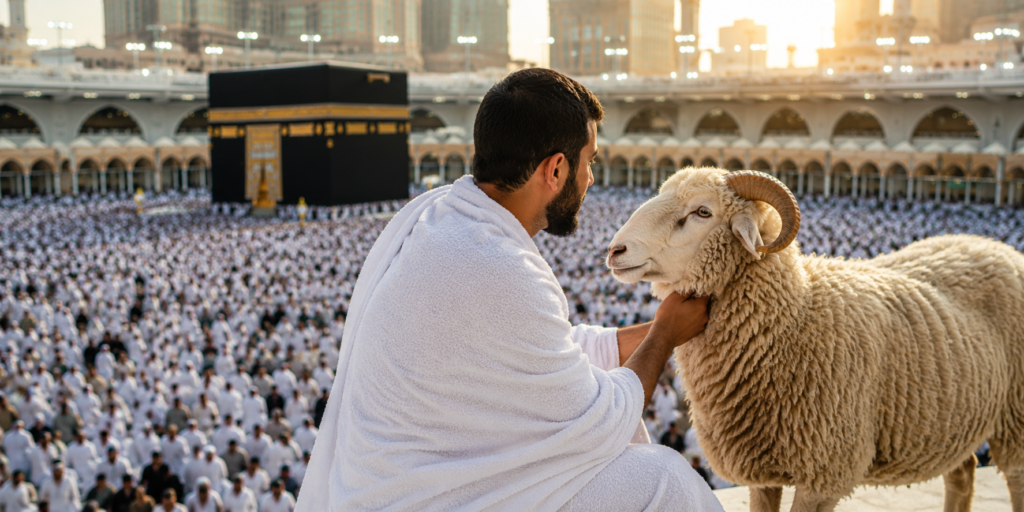
Every year, somewhere between the stoning at Jamarat and the walk back into Makkah, a quiet exchange takes place millions of times over: a voucher purchased, a name recorded, an animal set aside for someone who will never know the pilgrim who gave it. This act lies at the heart of qurbani in Islam and shapes one of the most meaningful days of the pilgrimage.
Pilgrims often ask what this step entails and how much it costs before they even pack their bags. This guide covers the story, the process, the price, and the rules for qurbani in Islam so nothing catches you by surprise once you reach the holy sites.
Qurbani During Hajj Explained
The practice of Qurbani during Hajj honors the story of Prophet Ibrahim (Peace be upon Him), who showed complete obedience to Allah by preparing to sacrifice his son, Ismail (Peace be upon Him). At the last moment, Allah replaced the boy with a ram, and that moment of surrender became a ritual pilgrims still carry out today. For those completing Hajj Tamattu or Hajj Qiran, the sacrifice performed in Makkah is called Hady, separate from the Udhiyah that Muslims worldwide perform during Eid al-Adha.
The point was never really about the animal itself. What matters is the sincerity behind the act, and the meat it produces goes straight to families who need it, turning a personal act of worship into something that reaches far beyond the pilgrim who arranged it. Pilgrims performing Hajj Ifrad are not required to take part, though plenty still choose to, since the reward carries on long after the pilgrimage ends.
How Qurbani Is Arranged During Hajj?
Saudi authorities built a formal system that handles the entire process for you.
Buying the Official Voucher
Pilgrims purchase a sacrifice voucher through the Adahi project, an official channel supervised by Saudi authorities. Pilgrims can buy the voucher online, through a Hajj group leader, or as part of a Hajj package with qurbani included as an amenity. This guarantees that the animal meets Islamic requirements for age and health.
The Adahi System Explained
Once purchased, the voucher links a pilgrim’s name to one animal. Adahi staff carry out the slaughter at a licensed facility during the designated days, following the correct religious method and recitation. This system lets pilgrims fulfill the obligation without managing the process themselves.
What Happens After the Slaughter
The meat is inspected, packaged, and frozen for distribution. A portion stays in Makkah for local families, and a larger share travels to communities across Asia and Africa. This organized system helps ensure the meat reaches people who need it most.
When Is Qurbani Done During Hajj?
The sacrifice takes place on the 10th of Dhul Hijjah, right after the stoning of Jamarat al-Aqabah, and pilgrims can still complete it on the 12th or 13th day if something delays them. Most people picture this as one hectic morning, but the voucher system extends that window.
For pilgrims performing Tamattu or Qiran, this step comes before shaving or trimming the hair, since the order of the rites matters. Confirmation usually arrives by text message, which means you can keep moving through the rest of Hajj knowing everything is already taken care of.
The days of sacrifice move fast once Hajj begins, and missing the right window is easier than most pilgrims think. Three N Travel & Tourism LLC, a dependable Hajj and Umrah agency in Dubai, keeps every ritual lined up with the rest of your schedule. Get in touch for a Hajj plan where every date is already sorted!
Who Is Eligible for Qurbani During Hajj?
Here’s who this obligation actually applies to:
- Pilgrims performing Hajj Tamattu or Hajj Qiran
- Adults who are sane and of sound mind
- Anyone financially capable, meeting the Nisab threshold
- Not required for Hajj Ifrad, though plenty still choose it voluntarily
- Those who cannot afford it may fast three days during Hajj and seven days after returning home
Qurbani Package Cost for Hajj
A clear budget matters as much as the ritual itself.
| Sacrifice Type | Approximate Price |
| Official Hady Voucher (Adahi, per pilgrim) | SAR 720 (about $192) |
| Additional Voucher for a Family Member | SAR 720 (about $192) |
| UAE Charity Adahi (local distribution) | AED 350 (about $95) |
| International Qurbani via Charity (per share) | $50 to $150 |
FAQs
1. Is Qurbani compulsory for every Hajj pilgrim?
No. It applies to pilgrims performing Hajj Tamattu or Hajj Qiran under the standard qurbani rules in Islam. Hajj Ifrad pilgrims are not required to offer it.
2. Can I skip Qurbani if I cannot afford it?
Pilgrims facing genuine hardship can fast three days during Hajj and seven days after returning home in place of the sacrifice.
3. Does the meat reach me personally?
No. The meat goes to families near the holy sites and in other countries.
4. Can I buy the voucher before I leave home?
Yes. Most pilgrims arrange this through their group leader or a licensed agent before departure, avoiding long queues in Saudi Arabia.
5. What happens if I forget to arrange it?
On-site Adahi counters remain available during the designated days, though booking early is still the safer choice.
Conclusion
Every part of this pilgrimage carries its own kind of care, and the sacrifice is no exception. Once you understand the story behind it, the process Saudi authorities have built around it, and the cost of the qurbani package for Hajj, this part of your journey stops feeling like one more thing to figure out. What’s left is the chance to focus on why you came to Makkah in the first place.
That kind of clarity is easier to find with the right support behind you. Three N Travel & Tourism LLC takes care of the details so nothing gets left to chance. Pilgrims looking to lock in their travel dates can explore our Dubai to Hajj package, designed for convenience. Get in touch and let your Hajj feel like it’s already sorted!