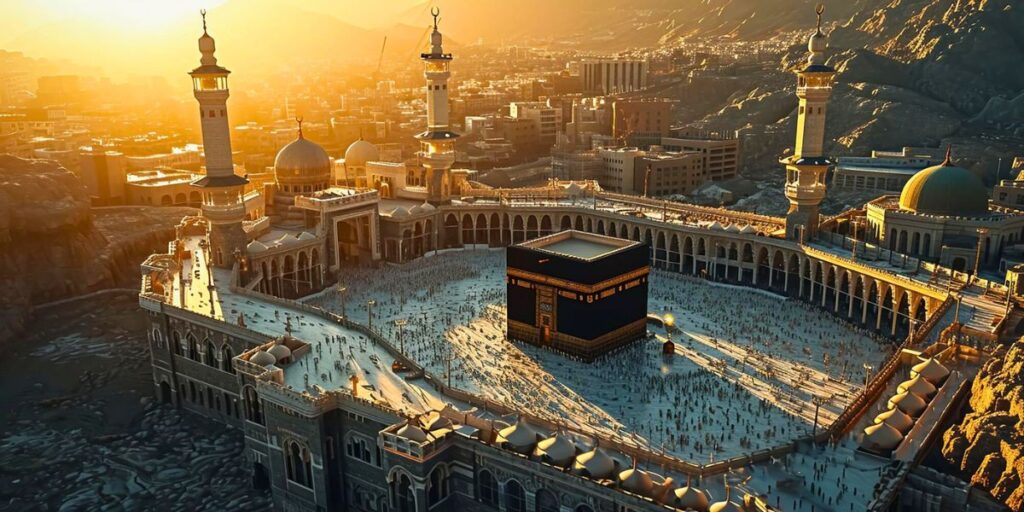
Preparing for Umrah or Hajj is one of the most meaningful journeys you’ll ever take. But many first-time pilgrims feel confused about where to start, what documents they need, or how to handle the physical and spiritual demands of the trip.
This guide will walk you through everything you need to know, step by step. Whether you’re planning your first Umrah or getting ready for Hajj, you’ll find practical advice that helps you prepare with confidence and peace of mind.
Why Proper Preparation Matters
Every year, thousands of pilgrims face unnecessary stress because they didn’t prepare properly. Some arrive without the right documents. Others struggle with the physical demands because they didn’t train their bodies. Many feel overwhelmed because they don’t understand the rituals they’re performing.
Good preparation isn’t just about avoiding problems. It’s about creating the right conditions for a focused, meaningful spiritual experience. When you’ve handled the practical details in advance, you can give your full attention to worship and reflection.
The truth is, Umrah and Hajj are not just spiritual journeys. They’re also physical challenges that require planning, stamina, and the right information. The more prepared you are, the more you’ll be able to focus on what truly matters.
Understanding the Difference Between Umrah and Hajj
Before you start planning, it helps to understand what makes Umrah and Hajj different.
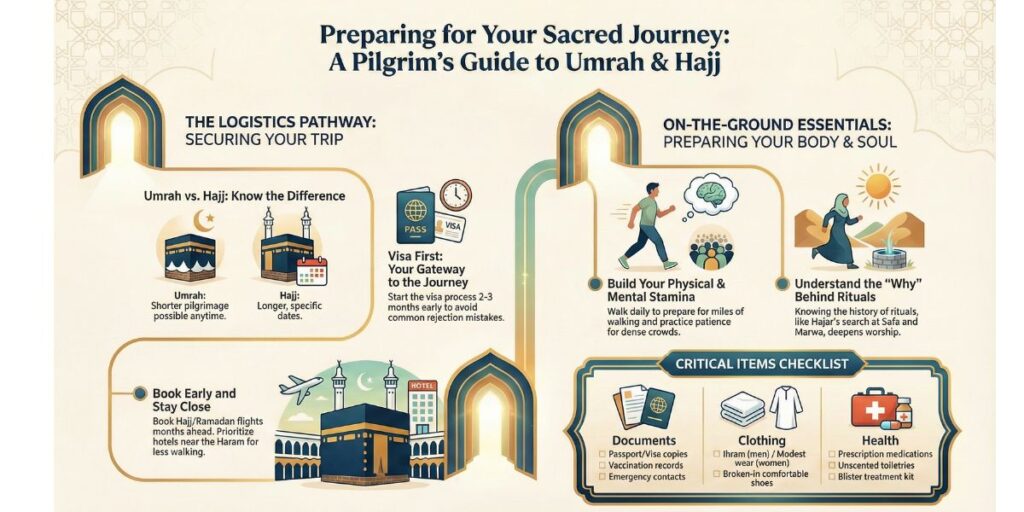
Umrah can be performed at any time of the year. It’s sometimes called the “lesser pilgrimage,” but that doesn’t mean it’s less important spiritually. It’s shorter and less physically demanding than Hajj. Most people complete Umrah in a few hours, though many pilgrims stay in Makkah for several days to perform multiple Umrahs and spend time at the Haram.
Hajj happens only during specific days of the Islamic calendar, in the month of Dhul Hijjah. It’s one of the five pillars of Islam and is obligatory for those who are physically and financially able. Hajj involves more rituals, more travel between holy sites, and significantly more physical effort. It typically takes five to six days to complete all the required rituals.
The planning needs are different too. Hajj requires more advance booking because millions of pilgrims arrive during the same few days. Accommodation fills up quickly, and prices rise. Umrah offers more flexibility since you can choose when to go, though Ramadan is extremely popular and requires early planning.
Understanding these differences helps you set realistic expectations and plan accordingly.
Visa Requirements and Travel Rules
Your visa is the gateway to your journey. Without it, nothing else matters.
Saudi Arabia has specific visa requirements that change periodically. The application process can seem straightforward, but small mistakes cause many applications to get rejected. Common problems include incorrect passport photos, missing documents, incomplete health records, or errors in the application form itself.
Many pilgrims don’t realize how strict the requirements are until their visa gets denied. This causes stress, delays, and sometimes forces people to miss their planned travel dates entirely.
That’s why it’s crucial to understand umrah visa rejection reasons before you apply. Knowing what causes rejections helps you avoid those mistakes from the start.
Saudi authorities also update their rules regularly. New health requirements, changed group policies, or different stay duration limits can all affect your plans. Staying informed about the latest umrah visa updates ensures you’re working with current information, not outdated advice.
Key visa tips:
- Start your application early, ideally two to three months before travel
- Double-check every detail on your application form
- Use recent passport photos that meet exact specifications
- Keep copies of all submitted documents
- Verify your passport has at least six months validity remaining
- Ensure your vaccinations are up to date and properly documented
Don’t rush this process. A rejected visa application can delay your journey by weeks or months.
Travel Planning Flights, Hotels And Getting Around
Once your visa is approved, the next challenge is organizing your travel and accommodation.
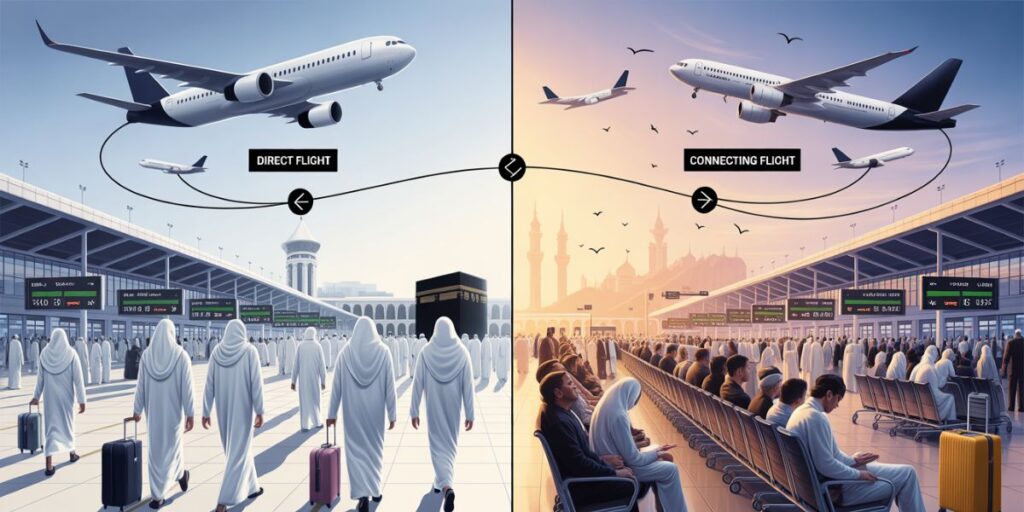
Flights: Book as early as possible, especially for Hajj. Prices increase dramatically as the dates approach. For Umrah, you have more flexibility, but Ramadan flights still fill up months in advance. Consider layovers carefully, long connections can exhaust you before you even arrive.
Hotels: Location matters more than luxury. Staying close to the Haram in Makkah or the Prophet’s Mosque in Madinah means less walking and more time for worship. Many older pilgrims and families with children prioritize proximity over fancy amenities.
Check reviews carefully. Not all hotels live up to their online descriptions. Look for feedback from other pilgrims about cleanliness, actual distance to the Haram, and how helpful the staff is.
Group Coordination: Many pilgrims travel with organized groups. This can simplify planning, but make sure you understand what’s included. Are meals provided? What about transportation between cities? Will you have a knowledgeable guide explaining the rituals?
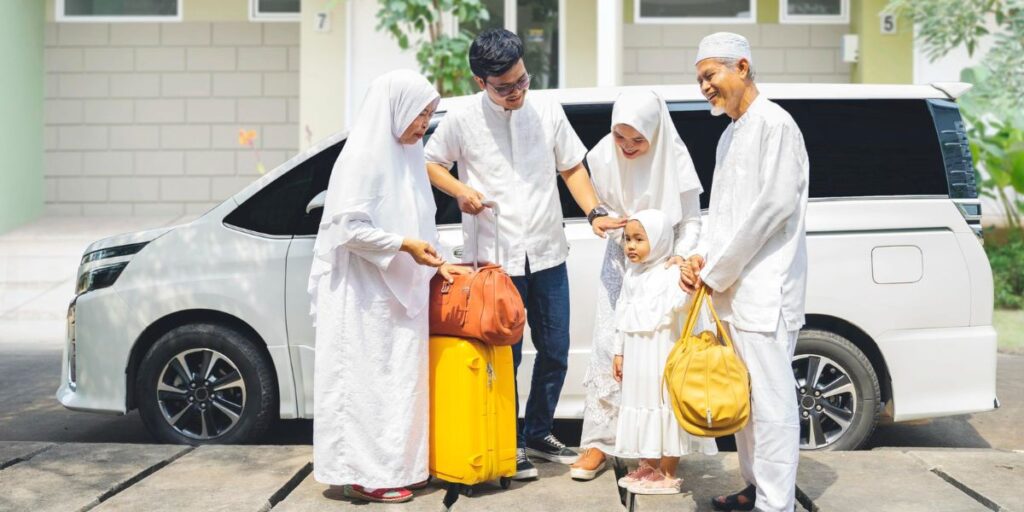
Local Transport: Getting around in Saudi Arabia requires planning. During Hajj especially, the roads between Mina, Arafat, and Muzdalifah get extremely crowded. Using reliablecab services during hajj can make your journey safer and less stressful, especially if you’re traveling with elderly family members or young children.
Many pilgrims underestimate how much walking is involved. Even with transportation between major sites, you’ll walk miles each day. Comfortable shoes and realistic expectations about mobility are essential.
Understanding the Spiritual Meaning Behind Rituals
Performing Umrah or Hajj isn’t just about completing a checklist of actions. Each ritual has deep spiritual meaning rooted in Islamic history.
Many first-time pilgrims focus so much on getting the steps right that they miss the significance of what they’re doing. They worry about whether they’re walking in the correct direction or saying the right supplications, which is important, but understanding the “why” behind each ritual enriches the experience immeasurably.
Safa and Marwa: A Story of Faith and Perseverance
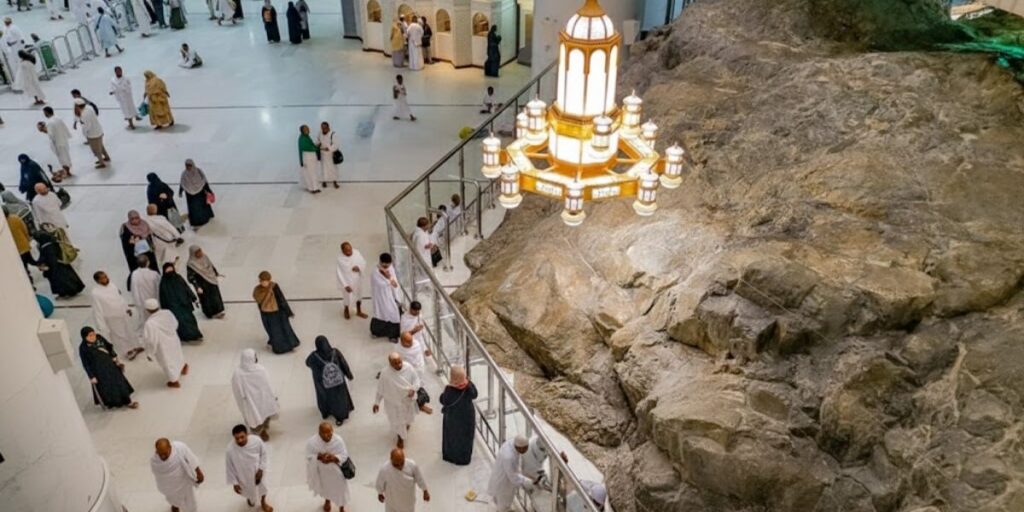
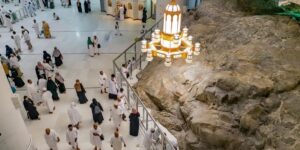
Walking between Safa and Marwa is one of the most physically demanding parts of Umrah and Hajj. You’ll walk back and forth seven times between these two hills, covering nearly two miles.
But this isn’t just exercise. You’re retracing the desperate footsteps of Hajar, the wife of Prophet Ibrahim, as she searched for water for her infant son Ismail. Her unwavering faith and trust in Allah, even in the most difficult moment, is what you’re commemorating.
Understanding the safa and marwa meaning transforms this walk from a tiring obligation into a powerful spiritual reflection. You’re not just moving your body, you’re connecting with a story of absolute faith that’s nearly 4,000 years old.
Many pilgrims say this becomes their favorite part of the journey once they understand its significance.
The Kiswah: The Sacred Covering of the Kaaba
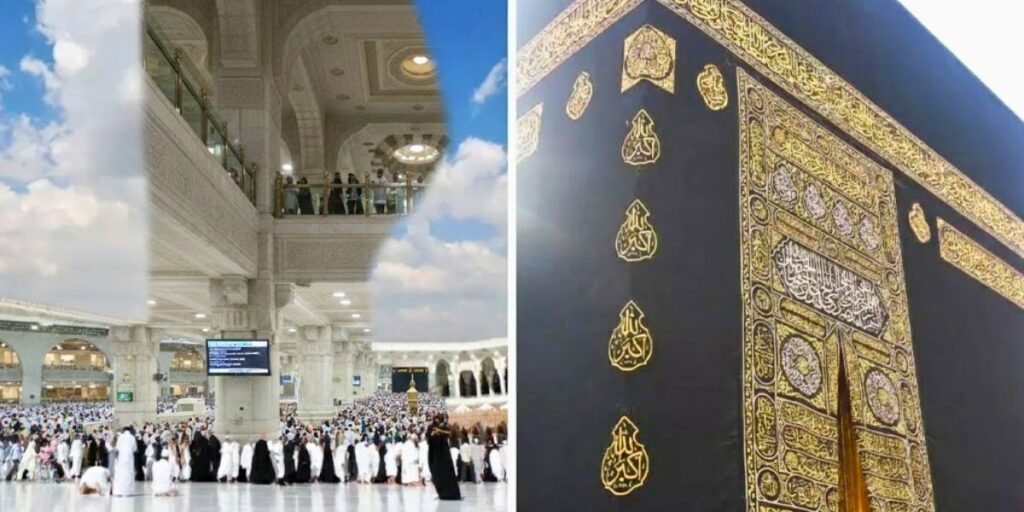
When you first see the Kaaba, one of the most striking features is the black cloth covering it, embroidered with gold calligraphy. This is Kiswah.
Most pilgrims don’t realize the Kiswah is replaced every year during Hajj. It’s not just any cloth, it’s a masterpiece of Islamic art and craftsmanship that takes hundreds of skilled workers nearly a year to create.
Learning about the kiswah of kaaba, how it’s made, and its historical significance adds another layer of appreciation when you stand before the Kaaba. It connects you to centuries of Islamic tradition and the care that goes into maintaining this sacred site.
These details might seem small, but they change how you experience these moments. Knowledge deepens devotion.
Special Preparation for Women Pilgrims
Women face some unique considerations when preparing for Umrah and Hajj.
Clothing: Women must wear modest clothing but do not wear a sewn “uniform” like men’s ihram. Most women wear an abaya and headscarf. The key is comfort and modesty. Choose breathable fabrics, especially if you’re traveling during hot months. Layering helps since indoor spaces are often air-conditioned while outdoor areas are hot.
Mahram Requirements: Traditionally, women needed a male guardian (mahram) to perform Hajj or Umrah. Recent rule changes have made it easier for women to travel, but requirements vary and change. Some women can now travel in organized groups without a mahram if they meet certain age requirements. Verify the current rules before booking.
Health Considerations: Menstruation affects which rituals you can perform. Women who are menstruating cannot perform tawaf (circling the Kaaba) or sa’i (walking between Safa and Marwa) until they become pure. This doesn’t invalidate your Hajj or Umrah, but it requires planning. Some women consult with doctors about medication to delay their cycle, though this is a personal choice.
Safety and Comfort: The crowds can be overwhelming, especially during Hajj. Women should stay close to their groups, keep important documents and money secure, and be aware of their surroundings. Many women find that traveling with experienced female companions or guides makes the journey more comfortable.
A comprehensive hajj guide for women addresses these concerns in detail and helps you prepare for the practical realities of the journey as a female pilgrim.
The key is preparation without anxiety. Understanding what to expect allows you to focus on your spiritual goals rather than worrying about logistics.
Physical Fitness and Mental Preparation
Umrah and Hajj are physically demanding. Even young, healthy pilgrims feel exhausted by the end.
Walking: You’ll walk miles every day. The tawaf alone requires circling the Kaaba seven times. The walk between Safa and Marwa is nearly two miles. During Hajj, you’ll walk between multiple sites, often in extreme heat and dense crowds.
Start preparing your body at least two months before your trip. Walk daily, gradually increasing your distance. Practice walking in the shoes you’ll wear during the pilgrimage. Your feet will thank you.
Hydration: The climate in Saudi Arabia, especially in summer, is extremely hot and dry. Dehydration is a serious risk. Drink water constantly, even when you don’t feel thirsty. Carry a water bottle everywhere. Zamzam water is readily available, but don’t rely only on fountains at the Haram, have your own supply.
Patience and Mental Stamina: The crowds test everyone’s patience. You’ll be bumped, pushed, and sometimes separated from your group. Lines are long. Spaces are crowded. This is where mental preparation matters.
Remember why you’re there. When frustration rises, take a deep breath and refocus on your intention. The physical challenges are part of the journey, they’re not obstacles to your worship, they’re part of the experience that builds spiritual strength.
Many pilgrims say the greatest challenge wasn’t the walking or the heat, it was maintaining inner peace in difficult moments.
Packing Essentials: What to Bring
Packing smart makes everything easier.
Documents: Keep these in a waterproof folder:
- Passport and visa copies
- Vaccination certificates
- Travel insurance
- Hotel confirmations
- Emergency contacts
- Group coordinator information
Clothing:
- Ihram for men (two unstitched white cloths)
- Modest, comfortable clothing for women
- Extra undergarments
- Comfortable walking shoes (broken in, not new)
- Flip-flops for hotel bathrooms
- Light jacket or shawl for air-conditioned spaces
Health and Hygiene:
- Prescription medications (bring extra)
- Pain relievers
- Antibiotic ointment
- Bandages and blister treatment
- Lip balm and moisturizer (the climate is very dry)
- Unscented toiletries (scents are not allowed during ihram)
- Wet wipes
- Hand sanitizer
- Sunscreen (unscented)
- Small first aid kit
Practical Items:
- Reusable water bottle
- Prayer mat (small, portable)
- Quran or dua book
- Waist bag or small backpack
- Phone charger and power bank
- Universal adapter
- Small amount of local currency
- Comfortable neck pillow for travel
For Women:
- Extra headscarves
- Safety pins
- Sanitary products
- Comfortable, modest shoes
For Elderly Pilgrims:
- Any mobility aids (canes, wheelchairs)
- Extra cushioning for shoes
- Any special dietary items
- List of current medications
Don’t overpack. You’ll be carrying your luggage through hotels and airports. Many items are available in Saudi Arabia if you forget something.
Choosing the Right Services And Support
Not everyone needs to book through a travel agency, but many first-time pilgrims benefit from organized packages that handle logistics.
Good services don’t just book your flights and hotels. They provide experienced guides who explain the rituals, help you navigate the crowds, and answer questions that arise during your journey. They coordinate group schedules so you’re not managing everything alone.
The challenge is finding reliable, honest operators. Unfortunately, some companies make big promises and deliver poor service. Look for providers with:
- Years of experience specifically with Umrah and Hajj
- Detailed information about what’s included and what costs extra
- Clear communication and responsive customer service
- Positive reviews from previous pilgrims
- Proper licensing and accreditation
Well-organized umrah packages take care of the complicated details so you can focus on your spiritual journey. Similarly, comprehensive hajj packages manage the complex logistics of traveling between multiple sites during specific days, which is especially valuable during the crowded Hajj period.
Whether you book through an agency or plan independently, the goal is the same: minimize stress and maximize your ability to focus on worship.
Ask questions. Understand exactly what you’re paying for. If something seems unclear or too good to be true, investigate further before committing.
Why Proper Preparation Makes All the Difference
A well-prepared pilgrim has a fundamentally different experience than someone who arrives confused, unprepared, and anxious.
When you’ve handled the visa correctly, booked good accommodation, trained your body, and learned about the rituals, you arrive with confidence. You’re not scrambling to figure out basic logistics. You’re not exhausted before you begin. You’re not confused about what you’re supposed to do or why.
This peace of mind is invaluable. It allows you to be fully present. You can focus on your prayers, your supplications, your personal spiritual goals. You can absorb the profound atmosphere of standing before the Kaaba or praying at the Prophet’s Mosque without distraction.
Many pilgrims describe their journey as life-changing. But that transformation happens more easily when you’re not overwhelmed by preventable problems.
Preparation isn’t just about avoiding difficulties. It’s about creating the conditions for a deeply meaningful spiritual experience.
Final Thoughts
Umrah and Hajj are journeys you’ll remember forever. The memories you create, the spiritual growth you experience, and the connection you feel to millions of believers throughout history, all of this becomes clearer when you prepare thoughtfully.
Start early. Don’t rush the planning process. Ask questions. Seek advice from people who’ve made the journey before. Understand not just what you’ll do, but why each ritual matters.
Take care of your physical preparation. Train your body. Pack wisely. Choose reliable services that support your journey rather than complicate it.
Most importantly, prepare your heart. This journey is about your relationship with Allah, your personal growth, and your commitment to living according to your faith. The practical preparation serves that higher purpose.
May your journey be blessed, your efforts be accepted, and your return be filled with the peace and spiritual renewal that every pilgrim seeks.
May Allah make it easy for you and grant you a journey filled with blessings, acceptance, and profound spiritual transformation.